
“Our journey across the Ashen wastes to the west was slow, full of fear, and made possible only by the efforts of the shamans and their nature magics that bore some life from the otherwise dead earth.
After what seemed like an eternity, moving only in the day to avoid the horrors of the night, we finally neared our goal. We could smell salt water, see a gentle smoke haze rising from distant signal flames, and hear the distant sounds of battle.
When we crested a rise, we finally saw the great fortification, a silver statue of a ship rising over the central keep and a great supply fleet docked in harbour. The dead were arrayed around it en mass, their banners bearing the old Pegasus symbol of Legio I Audiatrix. The undead had clearly sent some of their best.
We camped, fearfully, quietly that night, speaking among outselves on how best to cross the siege lines and enter the fort. In the end, the decision was made for us, as a team of Phaeacian scouts, men more akin to Aviim than humans, accosted us in the night and, at spearpoint, guided us through a secret entrance, and into the mighty fortress.
By our will or otherwise, we were now participants in the battle for Isaurian.”
|
1st Battle of Isaurian (Part of the Ermorian wars of Restoration) Late Year 2 of the Ascension War |
|
| Type: Attempted Siege Assault by Ermorian Forces | |
|
Engaged Forces |
|
| Ermorian Western Army “Amianus” | Phaeacian 2nd Army “Isaurian” |
| Legio I Audiatrix: 12,500 legionaries
Legio III Augusta: 12,500 legionaries IV Lictorian Legion: 2,300 lictors Singularion Horse: 1,440 knights Auxiliaries: 10,000 ghouls, 6,300 soulless, 16,3000 longdead warriors 17 command centuries, including Arch Bishop Amianus II’s retinue. Total force: c. 65,000 |
2nd Army Infantry: 8,450 colossi light infantry
Isaurian Garrison: 800 colossi archers Local Population: 700 human archers 1st Royal Expeditionary Group: 180 Gigante warriors, 200 Orichalcum guards 18 command centuries, including Dido, 3rd queen of Phaeacia, and 16 detachments of the Phaeacian priesthood. Total force: c. 12,000 |
|
Commanders |
|
|
|
|
Losses |
|
| Near total: 90% of engaged forces, all command elements escape |
C.7,100. casualties heaviest among infantry corps. |
|
Results |
|
|
Decisive Phaeacian Victory |
|
| Siege of Isaurian broken, Ermorian Western Army effectively ceases to exist. | |
| Subsequent raiding destroys a number of Ermorian temples and prompts entry of R’lyeh into the war alongside Phaeacia. | |
Background – The blessed Isle and the Ashen Empire
Phaeacia is an island nation, a fusion of old Bertyian and Arcocephalian ideals, famed for its wealth, opulence, culture, and ageless magics.
The island’s great merchant fleet survived the fall of the One, and in the opening years of the ascension wars, the Colossi Queens leveraged the great fleets of black ships, the rich orichalcum mines of Phaeacia, and the martial strength of the colossi and gigantes of the isle of Black Korkya to carve out a maritime empire amid the chaos of the underwater wars and the Ermorian conflicts with Pythium and Ashdod.
When Ashdod came near to falling, it became clear to the rulers of Phaeacia that they faced a choice. Either they could abandon their Eastern colonial holdings along the Ermor border, or they could commit the ritual, financial, and military resources necessary to hold the curse back, and draw a line in the sand before the Ermorian forces.
Bravely, the ruling Queens of the isle chose the latter course, and a great campaign of fortification was commenced, while raiding storm captains were dispatched to assail the Ermorian coastline, seeking temples, sites of magic power, and other resources to deny the ashen empire.
When Ashdod fell, the God in Eldregate at last felt confident enough to confront the Phaeacian ‘affront’ and assembled a great force to march West and eliminate the greatest sign of Phaeacia’s defiance. The great fort city which dominated the province of Isurian.
Isur’s Bastion
Long Walls to the Sea- Isur’s Bastion
“we entered the bastion by nightfall, and only when day broke could I truly appreciate its scale. This was no fort, this was a fortified city, packed with soldiers and civilians alike, ringed by a mighty wall. Such a site both impressed and horrified me, for no besieged force could hope to sustain so many thousands of civilians for an extended period of time.
As we were escorted above the markets and homes of the protected populous, eventually the ocean once again came into view and I had my answer. Two long walls stretched from the city out towards the ocean, several kilometers distant. the sun glinted from the shields of the warriors who patrolled the walls, as a stream of carts flowed both towards and away from the fortified bastion, towards the distant fleet.
“The long walls to Utique, where the black ships make dock” offered my captor and guide, “as long as they stand we will hold here, long after the dead have been ground back into dust by the passage of time.”
It is well understood that not all societies take the same approach to creating fortified positions. Some, like us, prefer to create small, heavily fortified structures designed to allow purely military contingents to hold out for extended periods of time. Others, like the Nazcans, create only rudimentary structures displaying their primitive natures.
Phaeacians do not produce fortified structures, they fortify entire cities, giving protection to the entire population during times of crisis.
So it was at Isur’s Bastion.
With a population running up to the better part of a hundred thousand, the city was the hub for all Phaeacian operations in the East. It housed a great temple, arcane laboratories, arms workshops, and all the infrastructure required to support military and commercial operations.
Constructed Inland atop a raised position blessed with a fresh water aquifer, Isur’s bastion was hypothetically vulnerable to the fate that befalls so many great fortresses…being starved into submission.
Unwilling to risk that, Phaeacia’s masons embarked a second great siege-works project, linking the fortified town to the sea by a kilometers long stretch of curtain wall. There, the port-town of Utique was built, guaranteeing supplies to the great city.

The result was a great fort that required an extensive garrison and support force to man its walls, but which could, if properly guarded, hold out against a much larger sieging force almost indefinitely.
While immortal, an indefinite hold out was something Ermor could ill afford, being at war on multiple fronts, and so the stage was set for the conflict to come.
Initial Dispositions – The Bastion and the Wall Breakers
Both the Phaeacian royalty and the black Senate in Ermor understood that Isur’s Bastion was critical to their ongoing war efforts, though perhaps somewhat more important to the Phaeacians than the Ashen Legions.
Without it, Phaeacia would be denied a forward port from which to project force against Ermor, and they would be denied the riches of their holdings on the Isaurian peninsula which jutted out of the growing Ashen Empire like a dagger in its side. For the Ashen Empire, the fortress demanded military allocations that could be used elsewhere, against Nazca, Caelum, Shinuyama, or any of the other forces against which they were engaged.
Both sides therefore committed considerable forces:
Ermor dedicated two fully raised and constituted legions, namely Legio I Audiatrix and Legio III Augusta as the core of the force. 25,000 skeletal combat veterans were a considerable force, significantly larger than the armies that had recently triumphed over Ashdod and the Shinuyama border forces.
These troops were augmented by the 4th Lictorian Legion, near its 2,500 strong full complement, and more than a thousand knights of the unholy sephulcre detached from the Imperial Singularion horse. These troops made up the dominant share of the army’s killing power, blessed as they were by Arch Bishop Amianus and his team of higher clergy and attendants. Amianus had been one of the first Arch-Bishops raised after the fall, and was known as a dedicated agent of the Ashen God’s will.
In order to carry out siege works, the Ermorian force also included more than thirty thousand auxiliary troops, primarily longdead warriors and ghouls. The latter part were also included as a deliberate insult to the Phaeacian rivals, for many of those afflicted by the hunger were Phaeacian civilians from those provinces that had fallen to Ermor during the earlier stages of the war.

The Phaeacian military was not to leave the challenge unanswered however and in the months preceding and even during the siege, thousands of reinforcing troops were sailed into the city.
While Phaeacia is famed for its great fleets of ships, its armies should not be underestimated, made up as they are primarily by the great colossi. This noble, dark skinned race traces their lineage from back through the Berytian Empire to a time when a tribal clan of collosi ruled the realm of Machaka. These ‘great men of the Mababwe’ were unparalleled warriors, either in Machakan or Berytian service, but on the island of Phaeacia they have multiplied in greater numbers than anywhere else, and now they serve as both rulers and the base of the military arm of that oceanic empire.
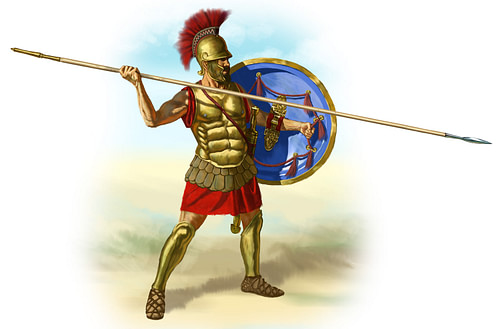
The overwhelming majority of the Phaeacian expeditionary army at Isaurian was thus made up of light collosi infantry, equipped in the standard Phaeacian pattern. This mean great warriors armed with shields, spears, and javalins, as well as linothorax armour in the late Arcocephalian style. While the shield and helms were heavy pieces, the linothorax itself is a much lighter, less protective piece. This is chosen for reasons of both fighting style and production costs. The lighter armour permits quite an athletic fighting style even in hotter climates, and encourages proactive use of shield and spear to prevent attacks, rather than risking taking them on the armour. The armour can also be more easily created than the large cast metal pieces required to create single piece metal armour for these larger than life figures.

At Isur’s Bastion, the Phaeacian 2nd Infantry Army presented itself with an established force of 8,500 colossi. These were divided into 170 bands of fifty warriors each. These bands were themselves usually paired with each other on the frontline to allow for some rotation and redundancy at any given point on the front. Operational army command was exercised by the Senior Storm Captain, while overarching command fell the the local representative of the Phaeacian monarchy, the mighty Queen Dido.
While each of these warriors was a formidable force, the Phaeacian defence plan acknowledged the sheer size of the perimeter that would need to be defended. Men had to be found to fill the gap, and so the local Governor managed to muster seven hundred human archers from the local population, mostly small game hunters and foresters. He also contributed the entire colossi garrison, some 800 bow equipped warriors.
This brought the strength of the Phaeacian infantry to more than 10,000, reducing the ratio of attackers to defenders to a ‘mere’ six to one.
The scale of the Phaeacian preparations were no secret. the practice of counting ships disgorging reinforcements was not unknown to Ermor’s veterans, and Amianus arrived knowing that his opponent had brought a significant force to defend their walls.
With an extensive siege perimeter to garrison and a large opposing force capable of moving up and down its own line with ease thanks to the long walls, Amianus, acting on the advice of his Censors, quickly opted against the idea of trying to starve out his opponents or launch a general assault all along the perimeter.
Instead, he divided his forces with economy in mind. Legio III was divided up and stretched into positions along both sides of the long walls. Undead legionaries took up positions out of bowshot, and then stood sentry, motionless, tireless, watching for any sign of enemy sallies from concealed ports along the wall. The bulk of the legion faced Utique itself, standing guard before the port’s walls, again seeking to guard against any attempted raids by Phaeacian forces…and pinning down at least some of Isur’s garrison in the port fortification.
The bulk of the Auxilia and the first Legion were set against the market sector of the wall, where the Ermorian veterans faced a combination of flatter land, a large gate, and a salient in the wall perimeter that would limit the amount of missile fire that could be brought to bear on the attackers. The plan then was to concentrate against he market gate, breach it via undermining, and then to throw 1st Legion and the 4th Lictorian Legion into the breach, screened by as many soulless, longdead, and ghouls as the army could muster.

The undermining process would take the better part of six months, slowed by proactive sallies and assaults by the Phaeacian forces that more than once forced entire sections of the siege line to be abandoned. Casualties were relatively limited, as both sides tried to limit their losses.
The Phaeacian army, now squarely under the command of the third Queen of Phaeacia, did not waste this short breaths. reinforcements were sailed in by the black ships, intended directly to answer the Ermorian plan that was becoming apparent. Troops would be needed that could hold the breach against the lictors and cavalry…and a way would be needed to put them in the grave.
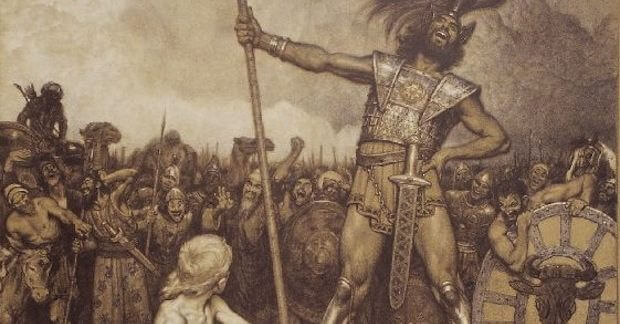
The solution settled on was to bring in a small corps of Phaeacia’s finest troops to hold the expected breach should all else fail. Two hundred of the elite orichalcum guard were sent from the fabled island itself to put their coppery armour to the test against the undead. Then, at the final line, one hundred and eighty gigante warriors, honouring their ancient oaths and carrying within them the military traditions of old Mekone, stood ready to hold until the very end. These last troops were the rarest of Phaeacia’s infantry, but they stood head and shoulders above the rest, matching rephaites in size but far eclipsing the fallen giants in skill, discipline, and equipment. For those of us who know the tale of Mekone’s fall and the bastard tyrants of distant Phlegra, to see some these Gigantes in service was almost humbling.

But spears, even giant spears, could not answer the undead hordes…not forever. Skeletons in particular are quite resistant to stabbing injuries and they would not tire in the way the colossi and gigantes would….and so a thousand more reinforcements were brought in, humble and small of stature. And then the Phaeacians waited for the gate to fall..
The Horde Cometh – The Ermorian Assault
“For weeks on end we watched the hordes beyond the wall, saw as more and more legionaries marched from their distant posts along our walls and arrayed themselves in silent ranks before the gate. They no longer cared about our ability to move or resupply, they just stood, silent, motionless, rotting, while the husks that still recalled their old sapping skills continued their work beneath our feet.
The collapse happened in the morning thankfully, a failure on the part of the Ermorian engineers no doubt. At just after 8am on what the Phaeacians informed me was the three hundredth day of the siege campaign, the earth shook, we heard the grating crunch of cracking stone and saw the fissures run up the flanks of the curtain wall. When the gatehouse fell, it fell outward, much of the ruble serving to fill in preparatory ditches they had dug for exactly that purpose.
One of the storm Captain’s aids had lent me a magnifying device they normally used in seafaring to enable me to survey the enemy force. On the tallest hill, amidst the gilded finery of purple and black silk tents and pennants, I saw the foul creature Amianus, distinctive enough in his white robes. He raised his hand, then lowered it.
As one, the horde began to shamble forward.
At the blaring of a trumpet, the first block of colossi marched towards the breach.
At the second sounding, they raised their shield and readied their javelins. Well behind them, and behind the blocks of reserves, the robed humans waited in their hundreds.
I looked to the aid of the storm captain, a great giant with me on the observation platform. Noting my gaze he spoke, as if to the horizon.
“I worship the spirits of this city, the will of the sea, and the awakening God. By their will, today I will deny death, and stand unbroken.”
For my part, my hand rested on my blade…for comfort if nothing else. After what I had seen this last year, I had little faith in spirits.”
When the assault came, it was, as expected, lead by the great masses of soulless and shambling longdead, their unlife intended for sacrifice at the alter of whatever defence was expected of the Phaeacian could offer.
That defence took the form first of a volley of arrows from the walls, then another, and another.
Arrows embedded in soulless flesh or bounced through skeletal bodies, and the dead kept coming, albeit now with a more pincushion like appearance. With each step they drew closer to the breach, a compressed mob twenty thousand strong. The Colossi readied themselves to meet the baying horde…and then the chanting commenced.
Amidst a thousand other robed figures, a young priest, Hanno, turned his palms up to the sky as he said the words.
His hands shook as the noise of battle washed over him, but he chanted the first verse, calling on the Lord of the South Winds to cast his eye upon the battlefield.
Sweat flowed down his brow as colossi soldiers flowed forward through the lose formation of the faithful. He canted the second verse, calling on He who Tempers the Spirit, to calm the hearts of the faithful and guard them the abominations of death made animate.
Calm. Calm confidence washed over him as he half-yelled the final verse, invoking the power of the Lord of Stellar Lights to BANISH the foul undead back to the underworld from whence they came.
From the heavenly spheres, a beam of light shone down. Where it landed, the longdead puppets stumbled, and crumpled into a pile of bones, a dozen souls or more, once more at peace.

Hanno could not see the results of course, his ritual willed to target beyond the mostly still intact wall. But from the battlements the archers called back, and word went down the line that it was working. That their God’s power was with them.
Hanno exhaled to steady himself….and then began chanting once more, and all around him, others did exactly the same.
The First Challenge- The First Legion’s Assault
From his position on the hill, it is held that Arch-Bishop Amianus was unmoved as the rain of lights from the sky cleared his fodder hundreds of animates at a time. Like wheat before a scythe, the blocking force fell before the breach, barely any making contact.
As if personally insulted by the display, the Lord Bishop and his attendants completed their own incantations, invoking the King of Men’s fates, the Ashen God, to grant his protection upon Ermor’s legionaries as they marched to a destiny of a reborn Empire. The magics holding their bones together stiffened, the slackness of their motions lessened.
And then the Censors commanded first legion forward.

Like the longdead before them, the legionaries (or rather their bones) advanced through a hail of banishing evocations, as the Phaeacian devout called upon their god for aid. Unlike the longdead before them, the legionaries did not immediately crumple unto dust. They would stumble, fray, maybe see a limb detach as the animating energies conserved themselves with less of the body. It was enough for them to make contact with the defences, a moment heralded by a great voley of rusted pila thrown into the waiting block of colossi.
Some of the great men fell, only a few at first, then more, as the press of spears met.
Skill, strength, and vigour all clearly favoured the Phaeacians. They threw skilled thrusts aimed at collapsing the diaphram, severing the spinal column, or breaking the flow of energies between limb joints. It was skill and strength enough to overcome the defences of the Ermorian infantry, though dozens of colossi did fall to weight of numbers, javelins, and determined thrust by spear and gladio alike.
As the dead pressed forward though, locked in a shoving of shields against their giant opponents, the priests brought the rain of holy light in closer, showering it over the front line. And while the magics of Amianus permeated their bones, in time, faith again began to win out, and the legion began to perish en masse.
It was working.
Blood and Horror- Amianus commits the 4th
As the losses among the mindless mounted, the very much mindful leaders of the Ermorian force must have taken stock. More than six months had been committed to this siege, along with one of the largest forces the Ashen Empire had mustered to date…and here it was, three and a half hours into an assault, with nought to show for it but a growing pile of bones and rotting flesh on the approach to the breach.
Longdead were one thing, their loss could be reported to the capital much as one might speak of the expenditure of ammunition or marching boots…but the loss of the 1st might have implications for other fronts, given the time that would be needed to gather and reanimate the bones once more.
Phaeacian records suggest that unease passed among the Ermorian commanders as well at this point, their chill winds flaring out anxiously as the Censors met and debated the best course. What happened next would seem to suggest that they came to the conclusion that the fort must be taken at all cost, lest face be lost. After all, they were not fighting the Pythian or Scelarian traitors, nor even the rebelious provinces of Ulm or Marignon….they fought living Barbarians, and to leave the field to such people could not be countenanced.
Among Pythian lines, the infantry were tired, but confident. An entire morning of fighting had yielded reasonably low casualties, and the work of the priests was proving up to the task. For the first time since the Ashen Empire reduced Ashdod to ruin, their perceived invincibility was beginning to fray.
Then the call from the wall came down.
Horses, skeletal horses, and the banner of the Singularion Cavalry…the knights of the unholy sephulcre.
Order were quickly yelled and the tired phaeacian colossi set themselves in defensive formation once more, harried by the last few legionaire longdead that simply refused to stop moving. The enemy cavalry came on with an unnatural quickness, their steeds racing across the field at a rate none of the men had ever imagined possible.
As the Phaeacian infantry readied their javalins, the knights of the unholy sephulcre lowered their lances, and broke into a full gallop.
It is a well known fact that all but the most trained of war horses will baulk at charging a line of prepared spears. It is for that reason that Ermor’s cavalry has long been used primarily for harrying actions and charges against broken or flanked enemies.
Undead horses have no such qualms.
A thousand knights barreled into the Phaeacian formation like ballistic projectiles, slamming full tilt into the line, lances hunting for enemies as the riders swung their spatha with unholy, mechanical drive. In seconds, casualties mounted as entire swathes were cut through the forward ranks, and the soulless riders sliced in, hacking in every direction, until at last a steel-nerved phaeacian could see the opening and land a few hard spear thrusts and shatter the enchantment.
The priests also said their words, but the speed of the exchange…bones for blood, limited their effectiveness for the first time in the battle. Now the fighting was being done by the poor, bloody infantry in earnest.
It was a brief fight, the suicidally offensive charge left the knights surrounded and outnumbered wherever they gained purchase and penetrated into the infantry blocks. But for each knight finally returned to the grave, fully two or three colossi were slain by its unholy motivating magics.
In harsh terms, it was an exchange that likely favoured the Phaeacians on the surface. In mere minutes the Ermorians had exhausted their entire cavalry force, and such troops were not as easily replaced as the light soldiery of Phaeacia.
But as the battered forward units struggled to find their footing on a ground now slicked with blood, covered with bodies, and strewn with bones, the reason for the Ermorian charge became clear to the Phaeacian commanders watching from above.
The Ermorian 4th Lictorian Legion, the slayers of the Rephaim, conquerors of Ashdod, were marching into the fight…and they were about to find a disordered, tired, near broken enemy formation in their way. And the 3rd Augusta marched at their back for good measure.

The Phaeacian commanders could do little but watch with some horror as yet again, the arrows from the walls rained down harmlessly on the leathery hide of the Ermorian troops, and the unnaturally quick shock-troopers of the Ashen god flowed into the Colossi and began the slaughter. Small teams also, exercising the initiative that their minds allowed them, began filtering up onto the walls, where they cackled as they buried their axes in the helpless archers now trapped on the battlements.
From his position, Senior Storm Captain Barca watched the melee develop, remaining pensive as others displayed apprehension. Using a vision device and the support of several aides, he went about an unusual battlefield manoever.
He began counting.
He counted for how long it seemed a line of his warriors could better the enemy with skill before their chilling aura inhibited their movements and allowed the lictors to finally combine axe-head with flesh. He counted how many lictors were put back in the grave every time the priests completed their incantations and another barrage of holy light rained down from above.
Like a Captain calculating whether or not an intercept course at sea was possible given known winds, he summed and accounted for each variable then, with a grimness worthy of Ermorian priest, he ordered the second line of infantry forward to bolster the first.
Half an hour of combat passed, as the banishment rained down and Colossi fell before the lictorian axes. Fell, but fell slowly.
He ordered the Third line forward, now having fully expended more than half of his infantry forces. He calculated they would stand for approximately forty minutes before the cold and fatigue overwhelmed them. When he checked the time node upon ordering the 4th line forward, he saw they had lasted thirty eight.
Enemy attrition, his aides informed him from their own counts, remained on track.
It was now creeping into the late afternoon, and the Phaeacian infantry was a shadow of its former self. Casualties were above 75 per cent at this point, and the smell of blood and slain bodies was begining to reach even the upper quarters of the city.
The priests, having been chanting since the early morning, were clearly wearying, as young boys and girls raced among them, pouring water into their mouths in stolen moments between verses.
The frontline had been pressed back, and was now perhaps no more than fifteen meters from the first of the priests. Hanno could actually now see the undead, foul leathery things on the other side of the phaeacian press…and the hint of their unnatural coldness lashed across his face.
Confidence was fading in his heart again, but licking his painfully dry lips, he began his chant once more.
Barca confirmed his estimates, the Phaeacian infantry were near breaking point..but the Ermorian horde was now a shadow of itself as well. Thousands more legionaries had been sent to the grave, and the lictors too had paid with the overwhelming majority of their number. They had come within meters of his priests….now they only had to be held.
But as the Phaeacian infantry faltered, the aggregate total of a few minutes here and there, where his troops had broken before he anticipated, seemed to be adding up to a stark realization….they could not hold alone.
Turning his vision device to the distant hill, he could still see the tattered Imperial Banners, and the robed figures. His enemies sensing an inevitable triumph.
Turning to an aid, he gave the last command he could think to give.
“send them in”
The Thin Gold Line – The Pledge Of Black Korkyra
“once they were known as monsters, oppressors, and tyrants. This day they were saviors.”
Hanno’s heart raced despite his exhaustion. He could SEE the line in front of him tiring. He could feel the cold as it manifested in icycles on his last, battered defenders…and he could hear the sickening sound of axe meeting flesh, muffled by armor on the way in and out.
He thought for a moment about pausing his ritual, so he might give his own soul its final rites, but he banished the thinking as selfish, and continued his banishment.
His ritual was interupted however but the slightest shake in the ground, and the *clank* sound of metal armoured feet on cobbled stone pavement. Shadow cast itself over him as giants, true giants jogged past him in perfect order. At the fore, one with a robe commanded the others, giving orders in a language he could not understand.
The gold armoured titans fanned out, sixty wide, three deep, setting themselves between the priests and the Ermorians. A few yelled forward in the Phaeacian tongue, calling on the colossi to fall back, something they did with glee.
They raced back between the giants, he stood perfectly still. Then the first lictors seemed about to close, and a command was given. A foreign word he none the less recognised, as it had been directly adopted by so many other nations.
“PHALANX”
The front line of giants compressed, brought their shield forward, and with a clang, locked the mammoth metal constructs together in a wall of bronze.
Spears slide forward through the gaps, as the second and third rank bolstered the first.
As the first lictors made contact, the gigante warriors went to work with their spears, and Hanno would later write that he saw a lictor’s torso caved in and run through by a single thrust of giant sized spear.

The lictors were far from helpless of course. Where a few axes found gaps in the shields, a task their quickness enabled, their colossal strength and choice of weapon allowed them to fell a number of Black Korkyra’s own, as they had once felled the Rephaim…but the Rephaim had not worn armour like this, had not fought in formation like this, and were not this skilled in the art of battle.
From his posting, Captain Barca saw his golden line hold strong, mere meters from his banishers.
He saw the last of the Lictors began to falter….and then to run.
Pursued by the honoured sons of Black Korkyra, true inheritors of the best of old Mekone, the last few of Ermor’s mindful undead raced from the field.
On the distant hill in the siege camp, the purple banners were struck and packed away, as Amianus and his Censors cast their mind to how best to justify what they had just witnessed.
A victory for the living
Aftermath – A Reprieve for the Living
The battle for Isur’s Bastion resulted in very little immediate change in terms of territory holdings. Phaeacia would retake the provinces immediately surrounding the fortress, and would raise a temple to the Ashen God in the process. Beyond that however, Ermor’s reserves and the limited ability of Phaeacian troops to advance into the ashlands without starving meant that further advances could not occur. In that sense, the battle seemed to change little.
Nor were the losses themselves totally decisive to either side. Even before the curse, Ermor was known for its ability to rapidly recover from defeats, and within a few months Ermor would again be putting pressure on the bastion. Within a year, it would be launching another siege. Phaeacia too was able to rapidly make up its losses, colossi being mobilised across Phaeacian holdings far faster than they were being killed on the Isur peninsula.
But strategically, operationally, and diplomatically, the battle’s impact was felt across the world.
Strategically, the collapse of the siege of Isur’s bastion was a major reverse for the campaign of Imperial restoration. Had the bastion fallen, it was likely Amianus army, complete with new reinforcements, would have moved on to new offensive operations elsewhere. Whether this took the form of an offensive into the great inland sea, or reinforcement of the Caelian or Shinuyaman fronts with an additional sixty thousand bodies is impossible to know. What is know is that, coupled with a similarly decisive defeat at the hands of Caelum, Isur’s bastion likely explains the persistence of resistance to the expanding Ermorian demense in the far East.
The defeat also meant that Phaeacia would persist as a strategic threat. Raiding, preaching, and serving to hold back the curse from the peninsula, a persistent thorn in the side of the God in Eldregate, sucking in additional resources for a year or more to come.
Operationally, the defeat also proved a learning experience for both sides. Phaeacia tested, and proved, the concepts first developed based on observations of the disastrous Ashdod conflict. The focus was shifted from using infantry to kill the undead, who would always have the numbers advantage, towards a focus on simply holding the horde in place, using a combination of walls and tough infantry, to allow time for massed batteries of preachers to undo the enchantments animating the dead. Once that was done, it peeled away the ablative walls of bone and flesh surrounding the Lictorian corps, who could then be (with great difficulty) put down by sufficiently hard-hitting troops capable of overcoming their tough hide and armour.
The experiment proved costly for the infantry of course, but it proved that if the right tools were brought to bear, the legions could be stopped.
Ermor too learned lessons. In the siege context, unlike in a field battle, the soulless and longdead had proven essentially useless. Only the 4th legion and the Knights of Eldregate had found any purchase in the Phaeacian line, with the chaff serving only to bog down the conflict and run up the Ermorian loss count. In future battles, the focus would be on bringing larger numbers of lictors to the field, and leaving the chaff to do the siege work.
Magic too would be an increasing area of focus for all sides. Ermor sought to find ways to turn its natural strengths to its advantage and break these grinding deadlocks, exploring the secrets of enchantment magic to find ways to tire or wear down the living.
Phaeacia, knowing new tools must be coming, would try to find ways to more effectively slaughter the Ermorian sacreds, who proved so resistant to banishment. They looked to the skies, and set their researchers to finding the answer.
But it was the diplomatic implications that made the battle perhaps most notable.
Phaeacia had won a battle and proven a battle could be won. In doing so, it effectively confirmed its own untouchable status in international affairs.
For powers watching from afar, wondering if Phaeacia would fall (and thus become a target to be salvaged from Ermor) or if their stand would succeed, Isur’s Bastion gave them their answer. Inspired by the example of the colossi on the peninsula, the otherworldly creatures of R’lyeh would shortly join the war, and commit mages and troops against the Imperial coast.
The Lady of Rainbows, the God of Ys, would similarly be moved by the Phaeacian plight, and would join the war within a few months of the battle, opening up a narrow flank near old Ashdod.
And to the bird people of Nazca, once tacit allies of the undead when fear of Ashdod had run high, similarly took note. They would commence their own offensives near Ashdod, seizing several provinces, perhaps overconfident in their ability to press into the Ashlands even without magical supply items or support from their sacred flocks still busy operating in the South.
For a while, confidence ran high among the coalition of the living.
It would take a number of subsequent, crushing defeats to deflate that confidence back to a more sober level, but even those defeats would not expunge the memory of Isur’s bastion…the first place where any living power had successfully defied the will of the Ashen Empire.










 Tales of Dominions